22 Gifts A Genealogist Will Love

If the person you’re shopping for loves family history, they don’t need another mug or notebook. What they really want are tools, education, and answers. This list is packed with meaningful gifts for both hobbyists and professionals. Today’s blog is to get the juices flowing for that genealogist in all of us.

close up photo of gift boxes with greeting card for genealogist gifts

1. Evidence Explained by Elizabeth Shown Mills

The gold standard for citations. Not exciting to non-genealogists. Thrilling to us. Link

2. Mastering Genealogical Proof by Thomas W. Jones

Perfect for anyone ready to move beyond beginner research. Link

3. Family Tree Magazine Subscription

Still one of the best all-around genealogy magazines out there. Link

4. Ancestry Gift Membership

Records, trees, and DNA tools. A classic for a reason. Link

5. Newspapers.com Subscription

Obituaries. Social news. Local stories. This one changes research fast. Link

6. Fold3 Subscription

A must-have for anyone researching military ancestors. Link

7. MyHeritage Complete Plan

Great for international records and photo tools. Link

8. AncestryDNA Kit

Still the largest matching database for genetic genealogy. Link

9. MyHeritage DNA Kit

Excellent for European and international matches. Link

10. 23andMe Kit

A good blend of health and ancestry. Link

11. RootsMagic Software

Powerful desktop software that syncs with major websites. Link

12. Family Tree Maker Software

Perfect for tree builders who love working offline. Link

13. Legacy Family Tree Software

Strong reports and charts. Loved by many professionals. This is what I use. Link

14. Legacy Family Tree Webinars Annual Membership

This is basically continuing education for genealogists. Best bang for your genealogy buck. Link

15. RootsTech Online or In-Person Pass

One of the biggest genealogy events of the year. It’s free online, but an in-person pass will have a fee. Link

16. Association of Professional Genealogists Membership

An excellent gift for anyone serious about going pro. Link

17. A Two-Hour Consultation with a Professional Genealogist (Me)

A personalized research session can save you years of frustration. Link

18. A DNA Results Interpretation Session

Perfect for people who have tested and now feel totally stuck. Link

19. A Research Project Gift Certificate

Instead of guessing… let them choose the problem they want solved. Link

20. A Local or State Genealogical Society Membership

Get a membership where they live or, better yet, where their ancestors lived.

21. A Writing-Your-Family-History Course

For genealogists ready to turn research into real stories.

22. A Brick-Wall Research Package

One focused question. One professional deep dive. One very happy researcher. Link

Finally

Whatever you choose, the genealogist in your life will love your gift. Click below if you want to get started on a project or buy a gift certificate for someone you love.

Related Posts

How To Join A Lineage Society

As a professional genealogist, I’m sometimes asked about joining a lineage society and what the process looks like. You may have heard of groups like the Mayflower Society or the DAR (Daughters of the American Revolution), but you’re not sure how to join or even if you qualify.

This post will help you understand what these societies are, why they matter, and how to know if you might join one.

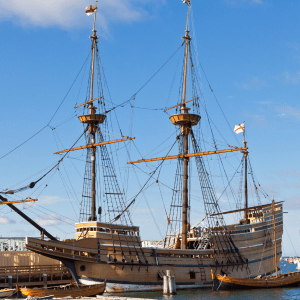
Mayflower Lineage Society
The Mayflower

What Is a Lineage Society?

A lineage society is an organization you can join if you can prove you’re descended from a specific person or group. That might be a Revolutionary War patriot, a Mayflower passenger, a colonial settler, or someone who served in a particular period of history.

You don’t need to be an expert.
Your family tree doesn’t have to be perfect.
You don’t need noble or royal ancestors.

You just need a documented line from you back to the qualifying ancestor.

That’s it. One link at a time. It’s what we do every day in genealogy. Start with what you know, move back one generation at a time verifying the links as you go.


Why Would Someone Want to Join One?

There are more benefits than people think. Here are a few big ones:

1. Preserving Your Family History

Joining a society means you’ve proven your lineage. It’s a way to make sure future generations can see the work you’ve done and understand where they came from.

2. Research Help

Many societies have historians or local chapters that offer help. Some also have member-only databases, libraries, or publications that can provide new research clues.

3. Community

You’ll meet others who care about genealogy and history as much as you do. For many members, this becomes a place to share discoveries and learn together.

4. Leaving a Legacy

For some, it’s a way to honor ancestors who served, settled, or contributed to early American history. It’s a way of making their stories matter.


Lineagy Society Examples

There are hundreds across the country, but here are a few well-known examples:

Each society has its own requirements. Some focus on military service. Others focus on early settlement. Some are national, while others are for a single state or region.

You don’t need to know every rule before you begin. You just need to start with one possible ancestor.


What You Need to Apply

First, know that this can be a lengthy process. Each link represents a parent-child relationship. Your goal is to document every step from you back to the qualifying ancestor.

Here’s the basic procedure:

1. Identify the Ancestor

Did someone in your family tree live during a qualifying time period? Did they serve in a war? Were they an early settler? Even a family story can be a starting point.

2. Prove Each Parent-Child Link

This is the heart of your research. You must show how each generation connects to the next. This can be done through common records like:

  • Birth, marriage, and death certificates
  • Census records
  • Probate records
  • Land deeds
  • Church registers
  • Military records

For more, read my blog “Why It’s Important To Prove Parentage In Genealogy Research.”

3. Complete the Application

Most societies provide a form or worksheet that leads you step-by-step through the process.

4. Submit to the Registrar or Historian

They review your documentation and verify your line. If something is missing, they’ll usually let you know what to fix.


Common Challenges (And How to Handle Them)

Every application has problems. Here are a few typical ones:

1. Missing Vital Records

Not every birth or marriage was recorded. In those cases, societies often accept other records, such as baptism records, probate files, land deeds, or church registers.

2. Conflicting Information

Names and ages can vary from record to record. That doesn’t disqualify you. It just means you’ll need to show a consistent pattern across multiple sources.

3. Same-Name Individuals

Your “John Smith” might not be someone else’s “John Smith.” That’s where location, family composition, witnesses, neighbors, and occupation can help.

4. Handwriting or Spelling Issues

Early records weren’t standardized. Spelling differences were common. Societies understand this and are not looking for perfection.

The key is simple: document clearly and stay patient.


What If You’re Not Sure You Qualify?

You don’t need a fully built tree before exploring the idea. Here are a few ways to start:

  • Look at ancestors living in the 1600s, 1700s, or early 1800s.
  • Check for military service during major conflicts.
  • Review family stories about early settlers or migrations.
  • Ask relatives if they’ve heard of someone joining a society. You might be able to piggyback on their application.
  • Focus on one line at a time—don’t try to cover them all.

What to Do Next

Here’s a simple action plan if you’re thinking of joining a lineage society:

  1. Pick one ancestor who lived during a qualifying period.
  2. Write a research question based on them.
  3. Identify which records you already have.
  4. Make a short list of what you need.
  5. Decide whether you’d like guidance or want to try it yourself.

That’s all you need to get started.


Need Help with the Process?

If you think you might have a qualifying ancestor and you’re feeling unsure about where to begin, I can help:

  • Review your family line
  • Identify gaps in documentation
  • Recommend record sets
  • Build a proof summary
  • Guide you through the application steps

You don’t have to do this alone. Lineage society applications are simply another form of genealogy research, and they’re absolutely manageable when you take them one step at a time.


Finally

Joining a lineage society isn’t about status or competition. It’s about honoring those who came before us, preserving history, and making sure future generations know their heritage.

If you’re ready to go down this path, this could be the week you take the first step. Find your qualifying ancestor and look online to see which society you can join.

Genealogy tip: Take it slow and keep good notes. It’s easy to get confused, especially if you come from a long line of people with the same name.

I’m available to help if you want to do this yourself and need guidance or if you want me to do the work for you. Click below to get started.

Related Posts

How To Search Smarter In Ancestry Record Collections

When most of us first start using Ancestry, we immediately type in a name, and maybe a place or year. But are you finding everything you can? Do you even know what each record collection contains?

In this article, I will tell you how to look with more intention, more focus. This will save you time and frustration, especially when you can’t find what you’re looking for.

photo of a woman thinking about Ancestry record collections

According to its website, Ancestry has over 65 billion records from 88 countries worldwide, with more added every day.

Whether you’re a beginning genealogist or you’ve been around the block with your ancestors a few times, it’s good to step back and really look at what’s being offered. Ancestry gives us many places to do that.

Ancestry Homepage

When you first log in to Ancestry, do you immediately start working? Have you ever stopped to see what their homepage offers?

Yes, they offer hints of who to research next, but did you also notice:

  • Popular photo hints
  • Collections that may be useful to you like yearbooks or census records
  • Hints for particular ancestors
  • Potential ancestors
  • In remembrance – birthdays, marriages, or deaths
  • Hints about people you may know
  • This week in history

In addition to these, there’s another place on the Ancestry homepage I’d like you to pay attention to…New and updated collections under Tools and resources.

Ancestry New and Updated Collections

Ancestry is constantly adding new collections and updating existing ones. As of the writing of this blog, here’s what that page looks like for the United States:

Ancestry new and updated collections

(Notice that I could have picked countries other than the United States from its dropdown menu.)

Being in Maine, I’m interested in the “Maine, U.S. Vital Records, 1775-1912” collection. This is a brand-new collection for me, so instead of jumping straight into the search bars, I want to see how it’s organized.

On the right-hand side of the page, Ancestry breaks the collection down into smaller parts you can browse. That’s where I start, because it helps me understand what’s actually in the collection before I run any searches.

Browse this Collection

It’s important to know what’s included in a collection and, sometimes, more importantly, what is not. If you’re looking for a particular time frame or location, and you take the time to browse, you may save yourself a lot of frustration by checking the collection’s contents first.

In this case, this section of the website is clickable to each record set included in the collection:

This allows me to choose the right one for my research subject rather than searching the entire collection. Be aware that some of these sets may have an index, and some may not.

Related Data Collections

Just below is a section of the website titled “Related Data Collections.”

This will give you ideas of other places to go on Ancestry that is similar to what you are looking for. It will also encourage you to look in the Ancestry Card Catalog. You can read more about that in my post, “Love At First Sight: The Ancestry Catalog.”

The “About” Section

Now, we get to one of the most important parts of any collection’s start page: the “About” section.

Every record collection on Ancestry includes an About section, tucked just below the search bars, and it’s one of the most valuable parts of the page. This short overview tells you exactly what the collection covers, including the years included, the locations available, any gaps in the records, and the kinds of information you can expect to find.

It also explains how the records were created and where they came from, which helps you understand their accuracy and limitations. When you take the time to read the About section before you search, you get a better picture of how to use that collection, what clues it can actually give you, and whether it’s the right place to spend your time.

Don’t ever miss reading about a collection before using it! This section will also include any links to resources that could be useful.

Finally

Taking a few minutes to browse a collection before you search increases your chances of success. You get a clearer sense of what the records cover, what might be missing, and how the information was created. Understanding the collection first makes your searches more focused, helping you move forward with your research with calm and intention.

Genealogy tip: Once inside a record collection, it’s essential to learn how it is organized. This will save you time and frustration as you hunt for your ancestors.

Looking for help searching for your ancestors? I’m available to help you get started or jump over your latest hurdle. Click below for a free 30-minute consultation.

Related Posts